"A service animal means any dog that is individually trained to do work or perform tasks for the benefit of an individual with a disability, including a physical, sensory, psychiatric, intellectual, or other mental disability [1]."As I've stated previously, I suffer with severe anxiety/depression including but not limited to, severe panic attacks, trouble functioning in large crowds, and even crying spells (just a few examples). I've been hospitalised once for anxiety which at the time we thought was an allergic reaction to something I ate but turned out it was a pretty bad anxiety attack. Then here recently I went in "voluntarily" for inpatient treatment for my depression because I tried to kill myself. I becoming more comfortable with talking about it so yeah.
Anyway, I've researched a number of websites to try and decide if it's meant for me. I haven't spoken about it yet to my therapist but I do intent to bring it up seeing as it might help me function better in life. The two main service type dogs I've been researching is Psychiatric Service Dogs (PSD) and Emotional Support Animals (ESA). I'm mostly focusing in on the PSD dogs rather than the ESA's partially because they seemed to be more in tune and trained more to help with the things I'd like to accomplish by getting a service dog.
An Emotional Support Animal is "an animal that has been prescribed for a person by his/her licensed therapist (a licensed mental health professional) in a properly formatted letter. This letter should state that the person is determined to be emotionally or psychiatrically disabled and that the presence of the animal is necessary for the disabled person's mental health." It doesn't specifically have to be a dog, it can be any animal. Literally. They don't need any specific or formal training other than basic commands if it's a dog. Usually they're considered comfort animals but they're still service animals none the less. It's the presence of the animal that helps reduce or calm symptoms of the person. [2]
A Psychiatric Service Dog "is a dog that is individually trained for people with an emotional or psychiatric disability so severe that it substantially limits his/her ability to perform at least one major life task. PSDs are considered service animals." PSD dogs provide medical assistance in a crisis such as bringing the owner medication, summoning help from a near by person or family member, helping those with balance issues, and even carrying medical information or medication in they're backpack vests. They can remind their handler to take medication. If you're interested in finding out more about what PSD dogs can be trained to do check out the link [3] [4].
A service dog may not be an option for some people, or some may not want that type of help, but it seems like a good thing to look into if you're having trouble like I am. There are certain qualifications for a PSD dog though. There are two categories, Physical and Mental disabilities. Some of the Physical disability qualifications for a PSD are Epilepsy, Seizure, Blindness and Hearing problems. Some of the Mental disabilities include Autism, Depression, PTSD, Anxiety and Bipolar. [2] Those are just some examples from both categories.
"A physical impairment is defined by the ADA as:
Any physiological disorder or condition, cosmetic disfigurement, or anatomical loss affecting one or more of the following body systems: neurological, musculoskeletal, special sense organs, respiratory (including speech organs), cardiovascular, reproductive, digestive, genitourinary, hemic and lymphatic, skin, and endocrine.
A mental impairment is defined by the ADA as:
Any mental or psychological disorder, such as mental retardation, organic brain syndrome, emotional or mental illness, and specific learning disabilities. [2]"I recently emailed the National Service Animal Registry to try and get a little more information other than a couple of websites. Currently I am waiting on a response and am hoping they can give me a little more information as well as some other resources to look further into potentially getting a PSD dog.
The Psychiatric Service Dog Partners website has a great article on getting started on finding/getting a support dog and choosing a dog that suits your specific needs. Take their chart for example:
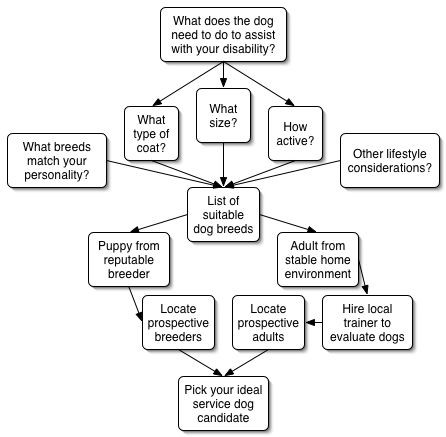
I think it breaks down what kind of dog would suit your need the best. It may not be a perfect system but it is handy. PSDP states that many dogs entering service training do not make it, so you should stack the odds in your favour by picking the breed and dog that will be most likely to work [for your particular disability] [4].
[1] Service Animals and Emotional Support Animals
[2] National Service Animal Registry
[3] Sterling Service Dogs
[4] Psychiatric Service Dog Partners